

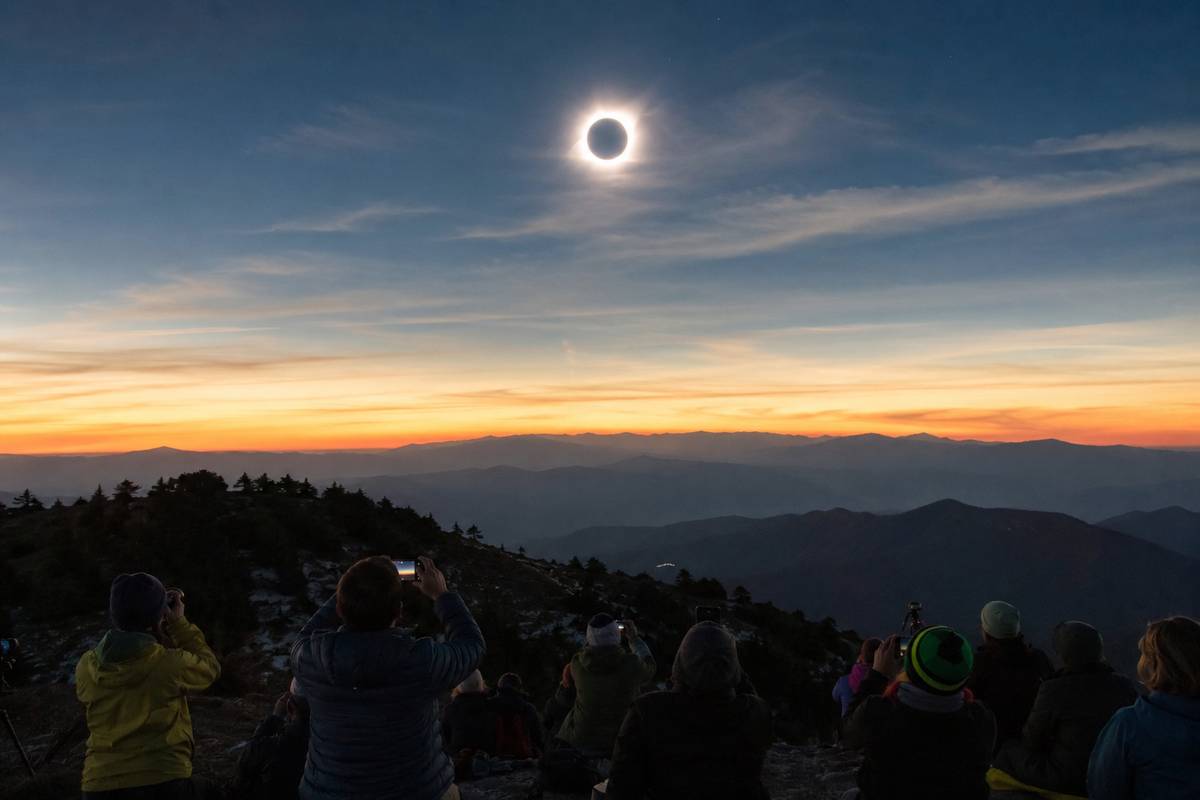
The total solar eclipse on August 12, 2026, will be one of the year’s most anticipated astronomy events. It will be the first total solar eclipse since 2024 and will occur during the peak of the annual Perseid meteor shower, creating an especially memorable week for skywatchers. The eclipse will also last slightly longer than many others because it takes place near the Moon’s perigee—the point in its orbit when it is closest to Earth, making it appear larger in the sky.
While the path of totality will be centered over parts of Europe, people across portions of the United States and Canada will still have an opportunity to see a partial solar eclipse.
Best Places to See the 2026 Total Solar Eclipse
The best locations for viewing the 2026 total solar eclipse are western Iceland and northern Spain, where observers will experience the Moon completely covering the Sun.
Spain Offers the Best Overall Viewing Opportunities
For most travelers, northern Spain is expected to provide the most favorable viewing conditions. The eclipse’s path crosses a much larger area of land in Spain than in Iceland, giving visitors more choices for observation sites. August weather in Spain is also typically much warmer, often ranging 20 to 30 degrees Fahrenheit higher than temperatures in Iceland during the same period.
Cities expected to experience totality include:
- Bilbao
- Burgos
- Palma
- Santander
- Valencia
- Valladolid
- Zaragoza
A small section of northeastern Portugal, including Montesinho Natural Park in the Bragança region, also falls within the eclipse’s path of totality.
Iceland Provides Dramatic Eclipse Views
Western Iceland will also offer exceptional viewing opportunities. The longest duration of totality is expected near Látrabjargi, while Reykjavík, Ísafjörður, and other communities along Iceland’s western coast will also experience the total eclipse.
Additional locations in remote parts of Greenland and Russia will fall within the path of totality, although reaching many of these areas may require specialized travel arrangements.
What U.S. and Canadian Viewers Will See
Unlike the 2024 total solar eclipse that crossed much of North America, the 2026 event will only be visible as a partial solar eclipse across portions of the northern United States and eastern Canada.
For U.S. observers, the amount of the Sun covered by the Moon will vary significantly depending on location. Cities in the Northeast will generally see the greatest coverage, while areas farther south will experience little or no visible eclipse.
For example:
- New York City is expected to see approximately 9% of the Sun covered at the eclipse’s peak.
- St. John’s, Newfoundland, is expected to experience about 53% coverage, making it one of the best viewing locations in eastern Canada.
The exact viewing time and percentage of coverage will differ from city to city, so observers should check local eclipse timing before the event.
A Rare Week for Astronomy Enthusiasts
The timing of the eclipse alongside the annual Perseid meteor shower makes mid-August 2026 an especially exciting period for astronomy enthusiasts. While the eclipse occurs during daylight hours and the meteor shower is best viewed at night, both events happening within the same week provide a rare opportunity for skywatchers to experience two major celestial events in a single trip.
Whether traveling to Spain or Iceland for totality or watching a partial eclipse from parts of the United States or Canada, observers should use certified solar viewing glasses or other approved solar filters whenever looking directly at the Sun.
Looking Ahead
The 2026 solar eclipse will offer millions of people a chance to witness one of nature’s most remarkable astronomical events. Although the best views will be found in Spain and Iceland, residents across parts of North America can still enjoy a partial eclipse, making August 12 a significant date for anyone interested in astronomy and space science.