

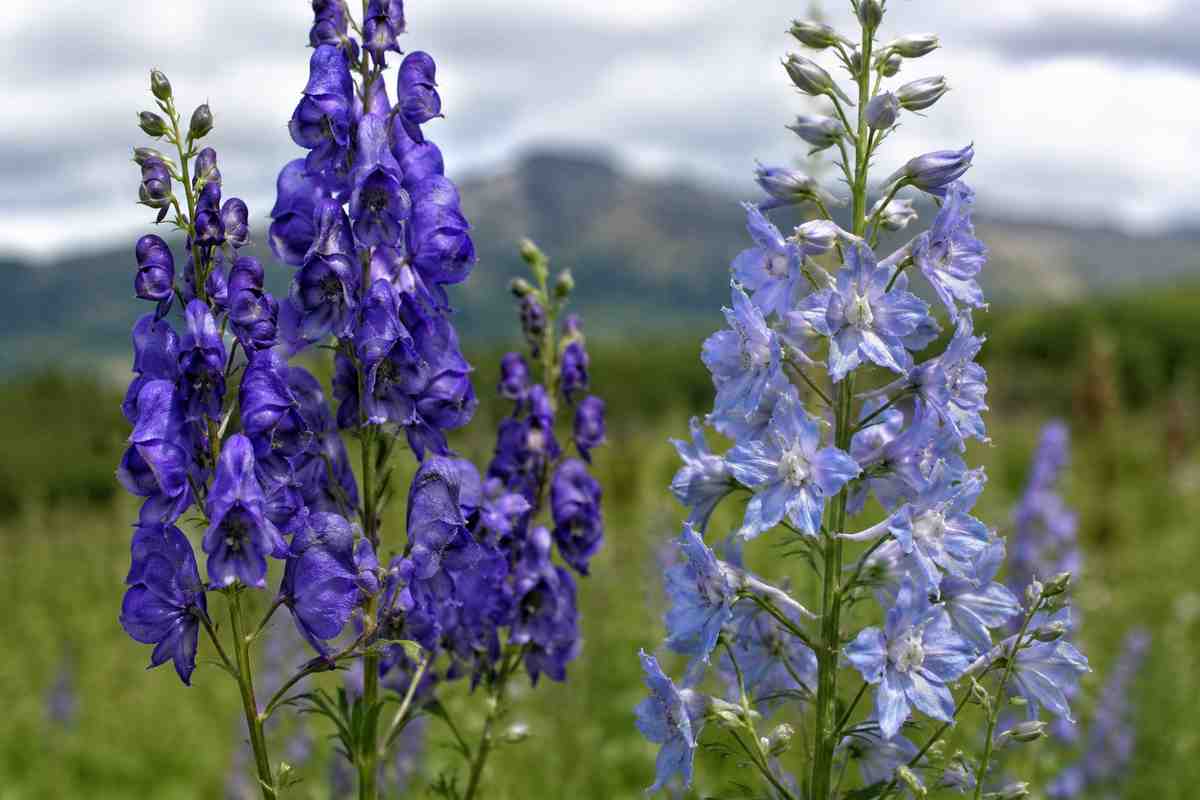
Some of the world’s most toxic plants may hold the key to future medical breakthroughs. Researchers have uncovered how two poisonous flowering plants produce a rare class of natural compounds that could eventually contribute to treatments for pain, cancer, malaria, and even agricultural pests. By recreating part of this process in the laboratory, scientists say they have taken an important step toward producing these complex molecules in a more sustainable way.
Researchers Decode the Chemistry Behind Toxic Plants
Plants capable of causing nerve damage and paralysis in extremely small amounts may also contain compounds with significant pharmaceutical potential. Scientists have now identified a series of enzymes that allow two highly poisonous plants—wolfsbane and larkspur—to produce a complex chemical known as atisinium.
The research, conducted by scientists from Michigan State University and the Czech Academy of Sciences, was published in the journal Molecular Plant.
After analyzing thousands of genes from both plants, the research team identified six enzymes responsible for building the compound. They then successfully recreated part of the process inside tobacco plants, providing a practical method for producing these rare natural chemicals for further study.
Ancient Medicinal Plants With Modern Scientific Promise
Although wolfsbane and larkspur are known for their toxicity, they have been used in traditional medicine in various parts of the world for centuries. Scientists believe understanding their chemistry could unlock new opportunities for drug development.
“These plants have been used in different forms of medicine throughout the world for thousands of years,” said Garret Miller, co-first author of the study, a Michigan State University alumnus and now an assistant professor of biotechnology at the University of Michigan-Flint.
“We know they interact with our bodies in so many ways, and understanding how to create them can help provide totally new routes of testing.”
Why Plants Remain Nature’s Best Chemists
Despite advances in synthetic chemistry, researchers say plants continue to outperform laboratories when it comes to creating highly complex natural compounds.
“Plants are the best chemists around, upgrading their arsenal of natural compounds over millions of years to help them survive,” said Björn Hamberger, study author and the James K. Billman Endowed Professor in Michigan State University’s Department of Biochemistry and Molecular Biology.
Many familiar products already come directly from plant chemistry or were inspired by it, including caffeine, capsaicin, menthol, and vanillin. Numerous prescription medications used in the United States and around the world also trace their origins to plant-derived compounds.
“Humans have found countless uses for these molecules in everyday life,” said Lana Mutabdžija, a graduate student at the Czech Academy of Sciences and co-first author of the study.
“These include caffeine, capsaicin, menthol and vanillin, not to mention the fact that many of the medicines we use today either come directly from plants or are inspired by plant chemistry.”
Investigating Specialized Plant Metabolites
Hamberger’s research team focuses on specialized metabolites, natural compounds that plants produce to defend themselves against predators, disease, and environmental stress. These chemicals often possess biological properties that make them attractive candidates for pharmaceutical and agricultural research.
In recent years, the team concentrated on larkspur, also known as delphinium because its flowers resemble the shape of a dolphin. Their goal was to determine how the plant produces diterpenoid alkaloids, a family of chemicals recognized for both their extreme toxicity and their potential medicinal value.
Solving a Decades-Old Scientific Mystery
Understanding how plants manufacture diterpenoid alkaloids has challenged researchers for decades.
These compounds combine characteristics from two of the largest and oldest families of plant chemicals, resulting in exceptionally intricate molecular structures. Their complexity has made it difficult for scientists to determine the exact sequence of biochemical steps plants use to assemble them.
By identifying the six enzymes responsible for producing atisinium and successfully recreating the pathway in tobacco plants, the researchers have provided an important piece of that puzzle.
A Step Toward Future Drug Development
The findings could eventually make it easier for researchers to produce sufficient quantities of these rare compounds for laboratory testing without relying on harvesting poisonous plants in the wild. That approach may accelerate studies into potential treatments for pain, malaria, cancer, and other diseases, while also opening possibilities for developing safer agricultural products.
Although additional research is needed before these discoveries translate into new medicines, the study represents a significant advance in understanding one of nature’s most chemically sophisticated—and dangerous—groups of plants.