

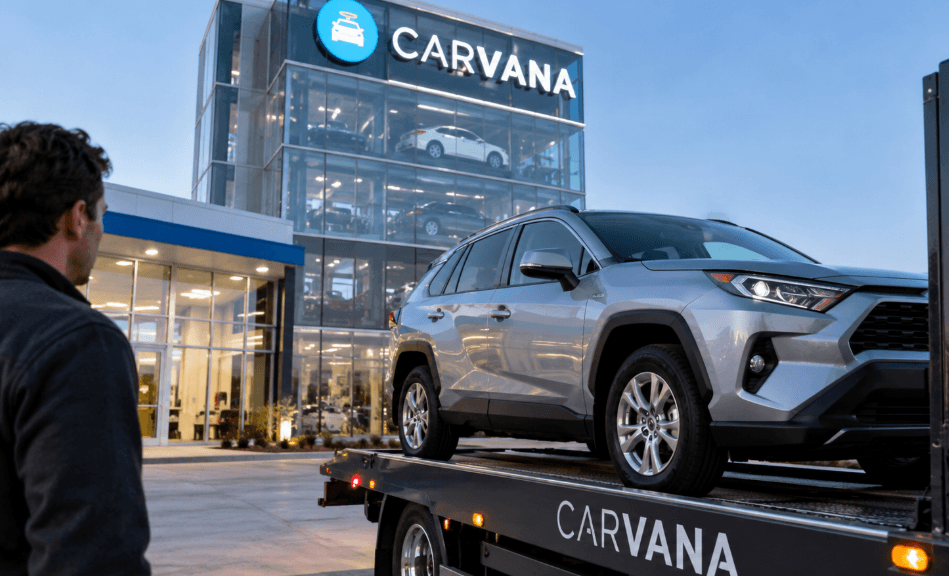
Buying a used car in the United States could soon become significantly easier as artificial intelligence reshapes the automotive retail industry. Carvana CEO Ernie Garcia believes AI-powered technology could simplify vehicle shopping, financing, trade-in evaluations, and delivery arrangements, potentially eliminating many of the complications buyers face during traditional car purchases.
The prediction comes as consumers continue to navigate high vehicle prices, financing costs, and complicated dealership transactions.
Carvana CEO Sees Major Changes Ahead for Used-Car Buyers
Purchasing a used vehicle often involves more than selecting a car and agreeing on a price. Buyers must consider trade-in values, loan approvals, interest rates, monthly payments, and additional fees that can increase the final cost.
Carvana CEO Ernie Garcia believes artificial intelligence could dramatically simplify that process.
During the company’s October 28, 2026, earnings call, Garcia outlined a future in which AI agents could handle multiple stages of a vehicle purchase on behalf of customers.
Rather than navigating separate websites, comparing financing offers, and negotiating transaction details, shoppers could eventually receive a comprehensive purchase proposal tailored to their financial circumstances and preferences.
Garcia said AI could “effectively reduce digital friction to zero while leaving physical friction largely unchanged.”
His comments suggest that the next major development in online vehicle retailing may focus on simplifying transactions rather than changing how vehicles are physically delivered.
How Artificial Intelligence Could Simplify Used-Car Shopping
AI Agents Could Handle Vehicle Searches and Financing
Under the purchasing model described by Garcia, AI-powered assistants could manage several important tasks traditionally completed by buyers.
These systems could identify vehicles that match a customer’s requirements, estimate the value of an existing trade-in, assist with financing applications, and calculate potential monthly payments.
The technology could then present the buyer with a consolidated offer showing the down payment, financing obligations, and available delivery arrangements.
Instead of completing each stage individually, customers could review the proposed transaction and decide whether to proceed.
Such an approach could reduce the time spent comparing vehicles and navigating complicated purchasing procedures.
However, Garcia’s comments describe a potential future application of AI rather than a confirmed rollout of a fully automated purchasing system.
Reducing Complexity in Online Car Purchases
Carvana has built its business around allowing customers to purchase used vehicles online, with home delivery and pickup options available in supported markets.
AI-powered shopping assistants could extend that digital model by reducing the number of decisions and administrative steps customers must complete manually.
For example, a buyer looking for a used SUV within a particular monthly budget could potentially rely on an AI assistant to identify suitable vehicles and organize financing information.
The customer would still need to evaluate the offer, including the total purchase price and financing conditions.
Physical processes, including vehicle transportation, inspection, and delivery, would remain necessary even if digital transactions became substantially faster.
What AI-Powered Car Buying Could Mean for Consumers
Greater Convenience Does Not Guarantee Lower Prices
Although artificial intelligence could make purchasing a vehicle more convenient, it remains unclear whether the technology would produce meaningful financial savings for consumers.
Used-car buyers must still account for interest rates, vehicle condition, taxes, registration expenses, and other transaction costs.
An automated purchasing process could make these details easier to understand, but it would not necessarily eliminate additional fees or guarantee more competitive financing.
Consumers would also need to determine whether AI-generated recommendations provide sufficient transparency about vehicle pricing and loan terms.
A simplified transaction could improve the shopping experience, but buyers would still benefit from comparing offers and reviewing the complete cost of ownership.
AI Could Change the Role of Traditional Dealerships
The potential expansion of AI-assisted vehicle purchasing could also influence traditional dealerships.
Dealerships have increasingly adopted digital tools to help customers browse inventory, estimate trade-in values, and explore financing options before visiting a showroom.
More advanced AI systems could consolidate those services into a single automated experience, potentially reducing the need for repeated interactions between customers and sales representatives.
However, dealerships would continue to play important roles in vehicle inspections, maintenance, customer support, and other services requiring physical interaction.
The broader impact would depend on how effectively automotive retailers integrate AI technology into their existing operations.
Carvana’s AI Vision Signals a Shift in Automotive Retail
Garcia’s prediction highlights how artificial intelligence could influence the next phase of competition in the U.S. used-car market.
For online retailers such as Carvana, simplifying the purchasing process could become an important way to attract customers seeking faster and more transparent transactions.
The technology could also change consumer expectations, particularly among shoppers already comfortable completing major purchases online.
Nevertheless, important questions remain about financing transparency, consumer protection, and whether automated recommendations consistently deliver competitive offers.
As AI capabilities develop, automakers, dealerships, and online retailers may increasingly compete on how easily customers can complete a purchase.
For American used-car buyers, the biggest potential change may not be the vehicles themselves, but how quickly and conveniently they can purchase one.