

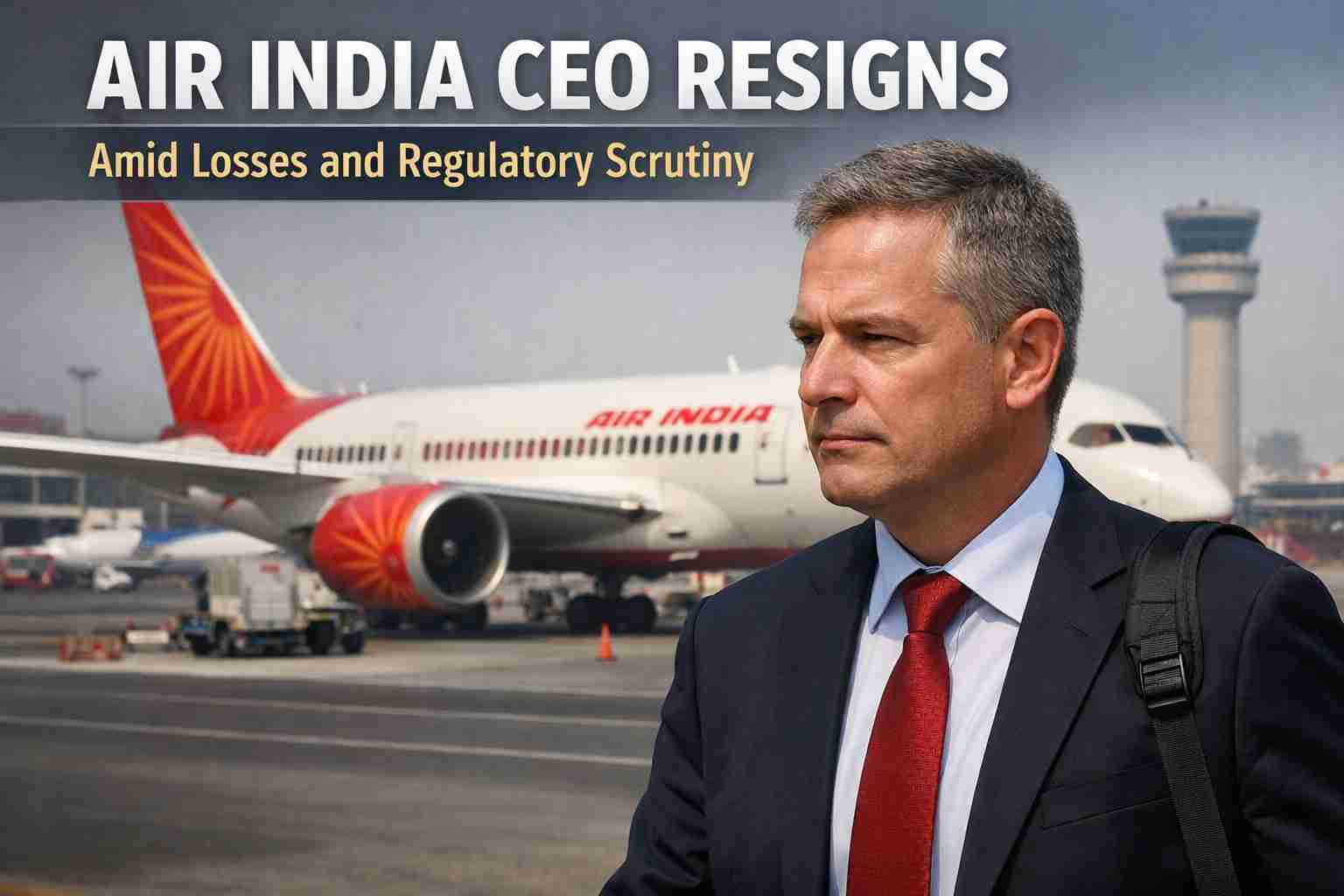
Air India’s chief executive officer, Campbell Wilson, has stepped down as the carrier faces mounting financial losses and increased regulatory scrutiny, according to a source familiar with the matter. The resignation comes at a critical time for India’s aviation sector, which is grappling with operational challenges and geopolitical disruptions.
Leadership Change Comes During Industry Turbulence
Wilson’s departure follows a turbulent period for the airline, including the aftermath of a fatal crash last year that claimed 260 lives. It also comes just days after rival carrier IndiGo appointed aviation veteran Willie Walsh as its next CEO, intensifying competition between India’s two largest airlines.
The broader aviation industry in India is under strain due to a combination of global and regional pressures. Ongoing tensions in the Middle East have disrupted international flight routes, while domestic airlines continue to face supply chain constraints, rising costs, and operational inefficiencies.
Search for New Leadership Underway
Air India’s board had already begun searching for a successor earlier this year, according to a Reuters report in January. Wilson, who previously held senior roles at Singapore Airlines, was appointed in 2022 following Air India’s acquisition by the Tata Group.
He was tasked with leading the airline’s long-awaited turnaround after years of financial decline under government ownership. His tenure was originally set to run until 2027. The source said Wilson is currently serving a six-month notice period and will remain in his role until a replacement is appointed.
Air India has not issued an official statement regarding the resignation.
Operational Challenges and Safety Concerns
Despite efforts to modernise the airline, Air India continues to face significant operational hurdles. The carrier has been affected by delays in aircraft deliveries, complicating its expansion and fleet renewal plans.
Regulators have also reprimanded the airline over safety lapses. These included incidents where aircraft were operated without valid airworthiness certification and without proper checks on emergency equipment—issues that have raised concerns about compliance and oversight.
In December, Air India acknowledged the need for “urgent improvements” in internal processes, communication, and compliance culture, highlighting ongoing structural weaknesses.
Financial Losses Weigh on Turnaround Efforts
Since its acquisition by Tata Group, Air India has struggled to return to profitability. The airline, along with its low-cost subsidiary Air India Express, reported a combined loss of 98.08 billion rupees (approximately $1.05 billion) for the 2024–2025 financial year.
External factors have compounded these challenges. Pakistan’s decision to close its airspace to Indian carriers has forced airlines to take longer, costlier routes, particularly on westbound flights to Europe and North America. A prolonged conflict involving Iran could further disrupt these lucrative routes, adding to financial pressure.
Air India currently operates a fleet of 191 aircraft and has placed orders for more than 500 additional planes, signalling its long-term growth ambitions despite short-term difficulties.
Pressure Mounts on Tata Group
Industry analysts say finding the right successor will be crucial for Air India’s future. Brendan Sobie, an independent aviation analyst based in Singapore, noted that Wilson had navigated “very tough circumstances” during the early stages of the airline’s restructuring.
However, he added that completing the transformation will be a complex task, particularly as Tata Group faces increased pressure following IndiGo’s high-profile leadership appointment.
Air India is chaired by Natarajan Chandrasekaran, who also leads Tata Group. Singapore Airlines holds a 25% stake in the carrier, reflecting a strategic partnership aimed at strengthening Air India’s global competitiveness.
Outlook for India’s Aviation Sector
Wilson’s resignation underscores the broader challenges facing India’s rapidly expanding aviation market. While demand for air travel continues to grow in one of the world’s fastest-developing economies, airlines must navigate a volatile mix of regulatory, financial, and geopolitical risks.
Air India’s next phase will depend heavily on leadership continuity and the successful execution of its transformation strategy. With significant investments already underway, the airline’s ability to stabilise operations and restore profitability will be closely watched by industry stakeholders and investors alike.