
RTV News Agency (UNAM), August 28, 2021
Mexico. – In order to contribute to the promotion and awakening of scientific careers in secondary school students from hard-to-reach rural schools, which lack laboratory space and equipment, the National Graduate School (ENES) Unidad Juriquilla, affiliated with UNAM, has donated “Mobile Laboratories” for 20 teacher of secondary education, provided guides for their use, teaching support, and gave them a refresher course.
The above is part of the “Neurosciences for All” program, promoted by UNAM neuroscientist Monica López Hidalgo, in collaboration with a group of university students, to provide teachers with the necessary tools and knowledge, in order to encourage their students to be able to pose and solve everyday problems.
Academics Monica López Hidalgo and Erica de los Ríos Arellano, as well as seventh-year Bachelor of Neuroscience students Laura Neely del Pilar Martinez and Jonathan Gutierrez Ledesma, are part of the design group for this project.
The several (Mobile laboratory) consisting of a box with slides (slides) in which they installed tissue sections from the brain of rodents, which are tissues that have been processed to distinguish brain cells with certain colors, and the way they are observed through a microscope.
Since there are no microscopic facilities to observe the samples, they use a transducer consisting of a lens and a light source – which they also received – which, along with a mobile phone, becomes an optical tool for image magnification, observation and analysis. Microscopic details of cells.
Therefore, we went from taking a simple biological sample to observing and taking pictures of astrocytes and neurons in mouse brain tissue; Thus teachers and students can visualize and analyze the structure of the brain,” explained Monica López Hidalgo.
He explained that images of tissues can be displayed for monitoring on a larger scale with the help of a virtual platform such as Zoom, and take pictures of cells. In addition, with the support of a tablet – which is also given to teachers as a donation – virtual classrooms are more interactive.
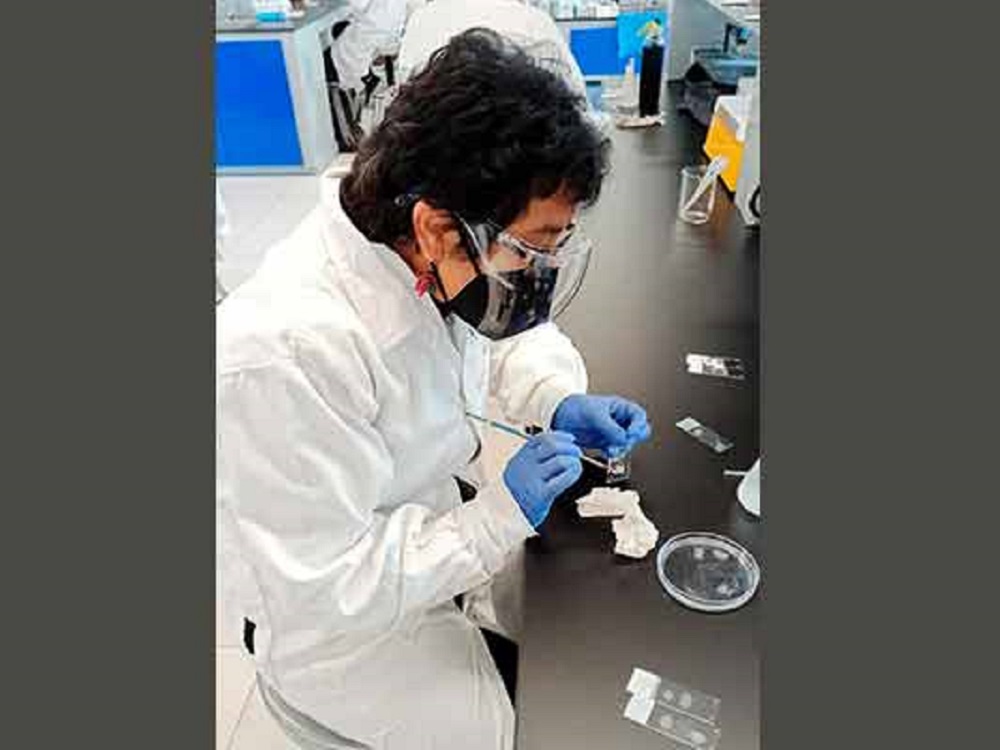
As part of the face-to-face training in the laboratories of ENES Juriquilla, in Querétaro, teachers participated in theoretical and practical activities, such as the use of microscopes and were instructed in the basics of neuroscience.
López Hidalgo emphasized: Neurosciences are used as a model to bring them closer to science, the task of asking questions to oneself, and addressing those questions based on experimentation, and thus making decisions based on evidence.
In the first edition of the modernization program, 20 teachers from different states of the country participated, 16 of them in person and four remotely.
It was funded by the Directorate General of Academic Personnel Affairs at UNAM, through the Education Innovation and Improvement Projects Support Program, and the Queretaro State Science and Technology Council.
Creativity in the transfer of knowledge
In turn, Erika de los Ríos Arellano, from the Institute of Neurobiology at UNAM and collaborator on the project, said: “It is gratifying to note the teachers’ feelings when they arrive at the neuroscience lab where they did the hands-on activity, especially because they may have struggled with finding the resources to impart knowledge.” “They left with great motivation and we can definitely see that reflected in their students.”
Laura Nayeli del Pilar Martínez and Jonathan Gutiérrez Ledezma, who among other activities developed the Training Manual for the course, stated that this document consists of seven chapters whose contents serve as support to guide the teacher in the use of the “mobile lab” and concepts that facilitate project-based knowledge acquisition.
Gutierrez Ledesma emphasized that teachers, despite their difficulties, “have the knack for finding ways to provide their students with the necessary knowledge; It was exciting and inspiring to see how there were teachers who had projects to create things with their own ingenuity.”