

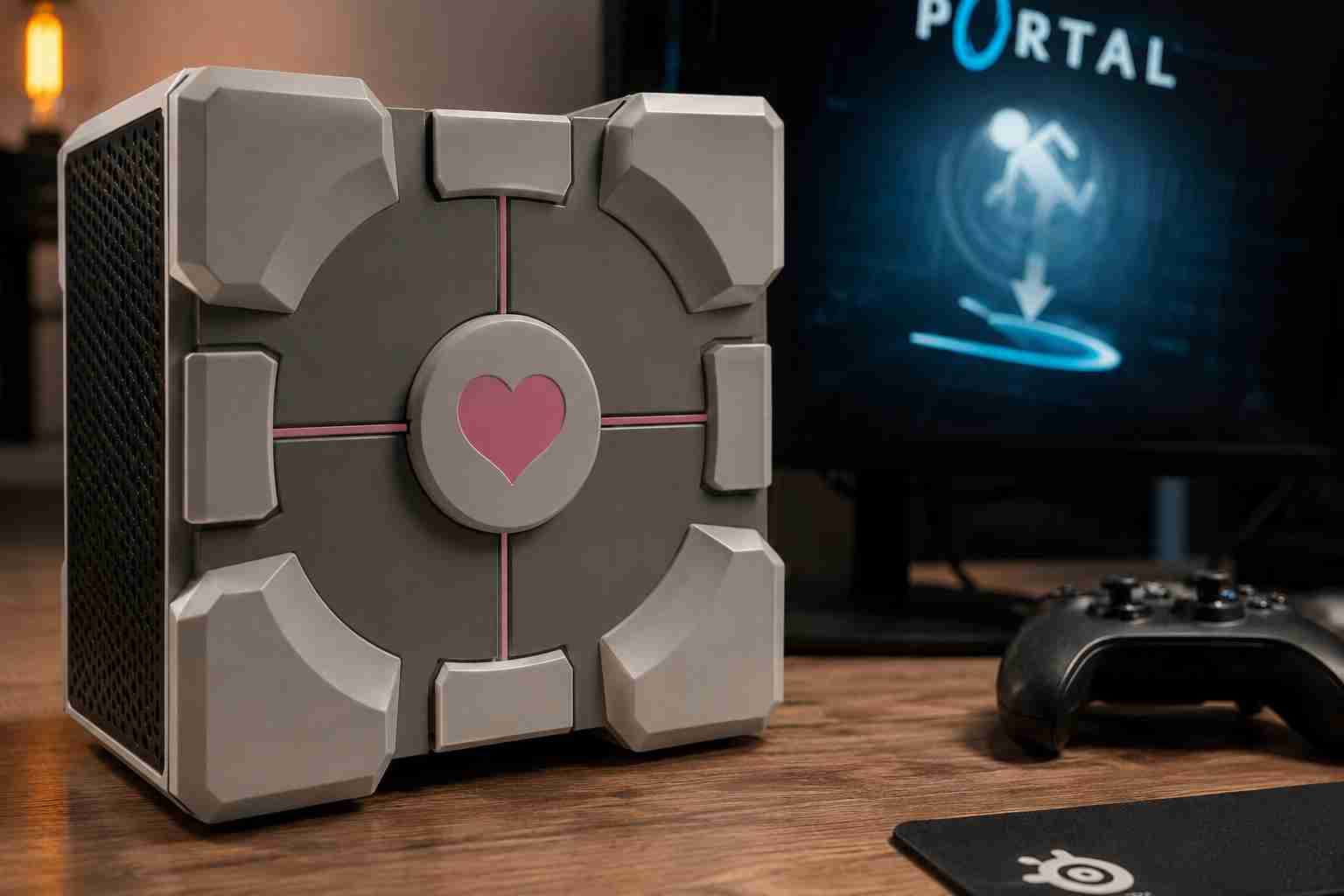
A custom Steam Machine accessory inspired by one of gaming’s most recognizable symbols has been pulled from sale after its creator acknowledged it did not have permission to use Valve’s intellectual property. The cancellation comes more than six months after Dbrand first unveiled the product and after it reportedly attracted more than 100,000 pre-orders.
Dbrand Pulls Steam Machine Accessory Following Valve Request
Dbrand had introduced a Companion Cube-themed case designed for Valve’s Steam Machine gaming platform. Inspired by the iconic Companion Cube from the popular Portal video game series, the accessory quickly generated attention among PC gaming enthusiasts due to its detailed design, affordability, and positive early reception.
However, the product’s release ran into legal trouble because Dbrand had not obtained a license from Valve to use imagery and intellectual property associated with Portal.
In a candid post published on Reddit, Dbrand admitted that despite the development work invested in the accessory, the company never sought or received authorization from Valve before bringing the product to market.
According to Dbrand, Valve’s legal team contacted the company shortly after the accessory became available for purchase and requested that all sales and promotional materials related to the product be removed.
Intellectual Property Concerns End Product Launch
The dispute highlights a common issue in the gaming and consumer electronics industries, where products based on well-known game franchises typically require formal licensing agreements before they can be sold commercially.
The Companion Cube is one of the most recognizable elements of the Portal franchise, a series developed and published by Valve. Because Valve owns the intellectual property associated with the game and its characters, imagery, and designs, companies generally must secure permission before using those assets in commercial products.
Dbrand said it attempted to negotiate an arrangement that would allow the accessory to remain on sale. However, Valve declined to move forward with such an agreement.
Despite the setback, Dbrand acknowledged Valve’s position and accepted responsibility for the situation.
In its Reddit statement, the company wrote: “Valve didn’t do anything wrong here. They built a game franchise a lot of people love and they alone get to decide how it’s used.”
Community Reaction and Customer Refunds
The situation generated discussion across gaming communities, particularly on Reddit, where users debated the risks of launching a product tied to a major entertainment franchise without securing licensing rights beforehand.
Dbrand’s transparency about the issue drew attention from users, with one widely discussed comment from Reddit user Degenerate_Media becoming a focal point of the conversation.
For customers who had placed orders, the cancellation means the Companion Cube case will not be released.
Dbrand stated that refunds for all purchases would be processed immediately. The company also said customers outside the United States who incurred additional shipping charges would receive reimbursement for those costs as part of the refund process.
What the Cancellation Means for Steam Machine Owners
The removal of the Companion Cube accessory leaves Steam Machine owners without what had become one of the platform’s most anticipated customization options. The case had appealed to fans of both PC gaming hardware and Valve’s Portal franchise, combining a distinctive visual design with a practical hardware modification.
While the product will no longer be available, the episode serves as a reminder of the importance of licensing agreements in the gaming industry, particularly when companies seek to capitalize on popular franchises and recognizable game-related imagery.
Conclusion
Dbrand’s Companion Cube Steam Machine case generated significant interest among gamers but ultimately failed to reach consumers because it lacked Valve’s approval to use Portal-related intellectual property. With the product canceled and refunds being issued, the case stands as a notable example of how intellectual property rights can shape the fate of highly anticipated gaming accessories.